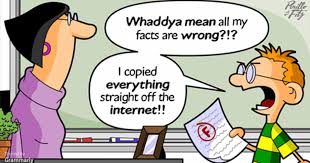
According to the Oxford dictionary, plagiarism is the "practice of taking someone else's work or ideas and passing them off as one's own”. Plagiarism takes many forms, ranging from copying the work of another person, copying and pasting from the internet to blatantly allowing someone else to write something for you. Using or copying someone else's music, art, pictures or other media without their acknowledgment is also plagiarism.
With the introduction of the World Wide Web, people have access to billions of other people's creations and ideas, therefore; some projects restrict you from using the internet.
What happens if one is accused of plagiarism?
If a person is found guilty of committing plagiarism in any assessment, he/she could be accused of violating a code of conduct which in turn could lead to intensive investigations and a disciplinary hearing on a charge of misconduct. Depending on the offense the plagiarist may be faced with a fine or more serious legal action.
How to avoid plagiarism?
The best way to avoid plagiarism is to write in your own words. If a student decides to use other sources for information it is best to reference those sources.
BMT College provides students with a BMTC Harvard Reference guide. Students can visit the Virtual Campus and download the BMTC Harvard Reference guide from My Downloads or find it attached.
Article by Rina van Wyk, BMT College.